In the southern reaches of the Netherlands, Limburg unfolds through rolling hills, river landscapes, historic towns and villages shaped by local traditions. Bordering Belgium and Germany, the province has a character distinctly its own, where vineyards and green countryside replace the familiar flat Dutch landscape and a Burgundian spirit brings good food, local wines and hospitality naturally into everyday life.
Destination: Limburg, Netherlands

Following the Maas: Towns, Nature and Hidden Stories
In northern Limburg, nature follows the course of the Maas. Close to Venray and Venlo, National Park De Maasduinen stretches along the eastern bank of the river, with river dunes, heathlands, forests and small lakes. Nearby Arcen is known for its 17th-century castle and extensive gardens, including its celebrated rosarium.
Around Venray, forests and farmland open towards another side of Limburg, while Weert provides a gateway to De Groote Peel, a landscape of wetlands and former peatlands on the border between Limburg and North Brabant.
Continue south and the Maas becomes increasingly central to the journey. Roermond, where the Roer meets the Maas, combines a historic city centre with the Maasplassen, an extensive network of lakes popular for sailing and watersports. Just outside the city, National Park De Meinweg reveals a rare terraced landscape of forests, heathland and streams.
Not far away lies Thorn, one of Limburg's most recognisable towns. Known as the "White Town" for its whitewashed houses, it was once a small independent principality with its own laws and currency. Today, cobbled streets, historic buildings and its imposing abbey church make it one of the province's most atmospheric stops.
Further south, Sittard marks the transition towards the hillier landscape that defines the final stretch of the province. Here, Limburg begins to look distinctly different from the rest of the Netherlands.


Into the Hills of South Limburg
South Limburg is the country's hill country, a landscape of orchards, vineyards, castles, forests and villages connected by winding roads and walking trails.
Valkenburg aan de Geul is one of its best-known destinations. Beneath the town lies an extensive network of marl caves, including the Fluweelengrot, while above ground visitors can explore the ruins of the country's only hilltop castle. Beyond Valkenburg, the River Geul winds through the green landscapes of the Geuldal.
Around Gulpen, Eys and Wahlwiller, vineyards have become another defining feature. The approximately 10-kilometre Route des Vins between Wahlwiller and Eys passes five vineyards, combining a walk through the hills with an introduction to local winemakers.
Continue towards Vaals and you reach the highest point of the European Netherlands. The Vaalserberg rises to 322.4 metres and, close to its summit, the Drielandenpunt marks the meeting point of the Netherlands, Belgium and Germany.
At the southern tip of the province lies Maastricht, where Roman history, medieval architecture and contemporary culture come together. The Vrijthof, Basilica of Saint Servatius, Helpoort and Sint Servaasbrug are among its landmarks, while independent shops, cafés and restaurants fill the historic centre. Nearby, the Sint-Pietersberg brings together Fort Sint Pieter, limestone caves and the former ENCI quarry.
The Taste of Limburg
Limburg's food culture begins with the landscape. Orchards, asparagus fields, vineyards and farms have shaped what people eat here for generations, while its position between Belgium and Germany has given the region a culinary character distinctly its own.
Nothing represents Limburg quite like Limburgse vlaai. Traditionally baked with a yeast dough and fillings ranging from cherries, plums and apricots to rice, it is closely tied to birthdays, family gatherings and the simple ritual of coffee and vlaai. Since 2024, Limburgse vlaai has held protected European status, formally recognising a tradition shared across Dutch and Belgian Limburg.
Fruit is another important part of the story. South Limburg's orchards produce apples, pears, cherries and plums, sold fresh or transformed into regional products such as Limburgse stroop, a concentrated fruit syrup traditionally made by slowly cooking apples and pears.
Spring, meanwhile, belongs to white asparagus. Known locally as "white gold", asparagus is grown extensively across Limburg and its arrival marks a culinary season of its own. Restaurants, farm shops and roadside stalls celebrate the harvest, traditionally serving the spears with butter, egg and ham, while contemporary chefs reinterpret the ingredient in their own way.
There is a heartier side to Limburg cooking too. Zoervleisj, or Limburgish zuurvlees, is a slow-cooked meat stew characterised by its balance of sweet and sour, traditionally created with vinegar, apple syrup and ontbijtkoek.


From Orchards to Vineyards
Perhaps the clearest expression of Limburg's evolving gastronomic identity can be found among the hills of the south. South Limburg is the heart of Dutch wine country, with vineyards now part of the landscape around Maastricht, Gulpen, Eys and the surrounding Heuvelland.
The area's slopes and soils support a growing generation of winemakers producing still and sparkling wines that increasingly appear on local restaurant lists. Wine routes lead between vineyards and villages, while Limburg's established brewing tradition adds another dimension to the region's drinks culture.
From vlaai and asparagus to local wine and contemporary cuisine, food offers another way to understand Limburg and the landscapes that shape it.
Discover Limburg Through its JRE Restaurants
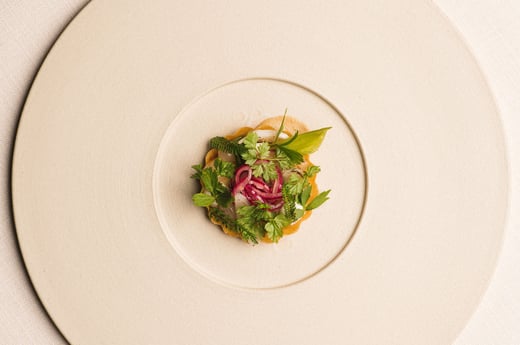
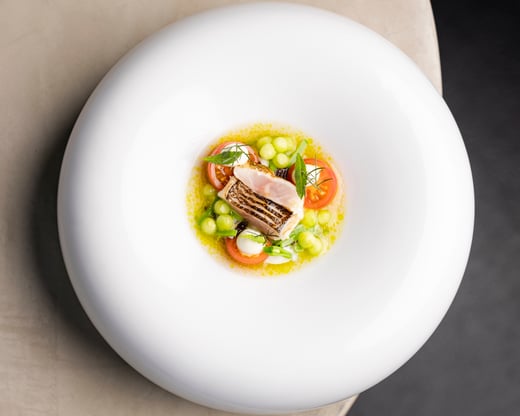
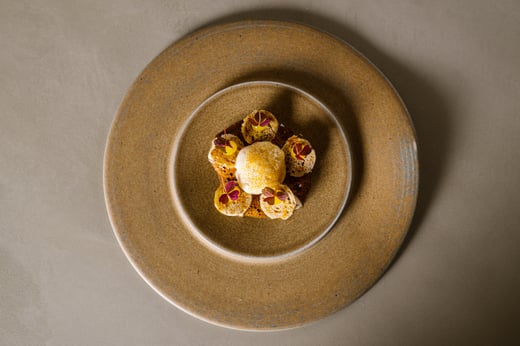
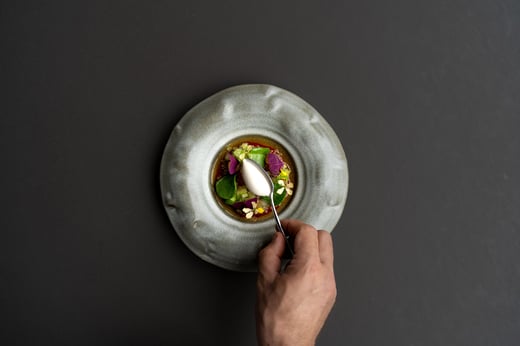
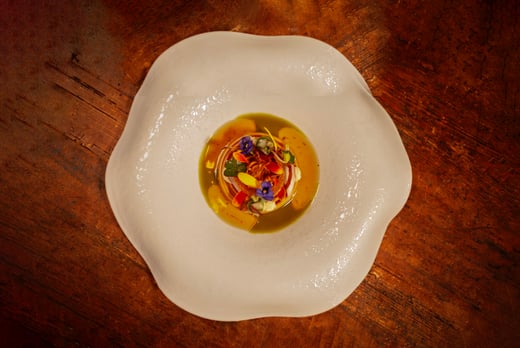
Limburg's gastronomic journey continues through its JRE restaurants, stretching from Venray in the north to Maastricht at the southern tip of the province.
In Venray, De Beejekurf, led by chef Mathijs Jacobs and hostess and sommelier Hanneke Verstappen-Jacobs, works closely with local producers and artisans, combining contemporary cooking with flavours and memories from the past.


Further south in Weert, Jan and Patricia Marrees welcome guests to MARREES, where seasonal cuisine meets Mediterranean and international influences.


Around Roermond, three JRE restaurants offer very different experiences. In nearby Posterholt, Holsterhof brings fine dining to a former family farmhouse, where chef Kaj Landman and host Lissa Landman have created a relaxed gastronomic destination rooted in the countryside. In Roermond itself, ONE occupies the former ECI industrial complex, bringing creative cuisine into a striking piece of the city's industrial heritage. Rura, led by chef Joey Remie and sommelier Naomi Habets, offers another perspective from a 17th-century building between the Roerkade and Markt.


Continue south to Sittard, where G7 occupies the historic Gruizenkerkje dating from 1634. Chef Rik Opstals and maître-sommelier Danny Meijers work closely with the seasons, using vegetables, herbs and flowers from their own gardens, while Limburg wines also have an important place in the experience.


In the hills of South Limburg, Atelier in Gulpen brings contemporary French cuisine to a former tailor's studio overlooking the market square. In Valkenburg aan de Geul, Ambrozijn occupies the former Irene Church on the Cauberg, with part of its wine collection stored underground inside a marl cave.


The journey ends in Maastricht's Jekerkwartier at Au Coin des Bons Enfants, where chef Timo Reichelt's cuisine combines classical foundations with Mediterranean influences, accompanied by sommelier Lino de Vrede's distinctive approach to wine.


Together, Limburg's JRE restaurants provide a gastronomic route through the province, connecting its cities, countryside, local produce and changing landscapes through nine very different dining experiences.