Interview with JRE-member Vladimir Kučera, Delirium Silence: Molecular Freedom and Culinary Discovery
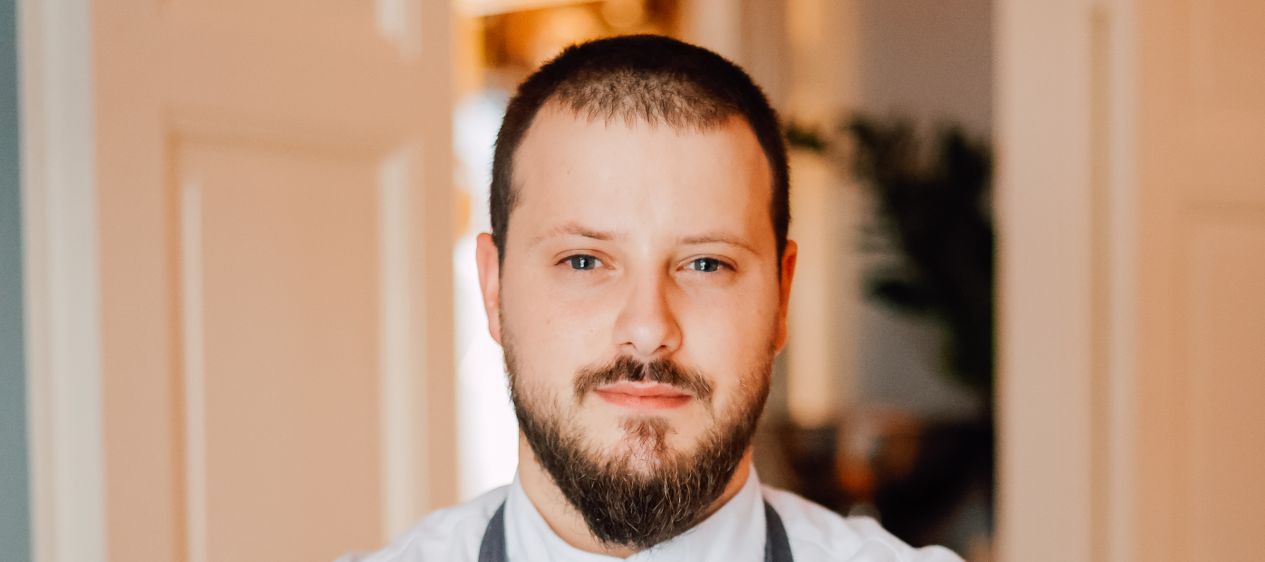
Just as a painter carefully selects colours to bring emotions to life on canvas, Vladimir Kučera blends ingredients, textures, and forms with intention and passion to tell his own story on the plate. As a Chef of Delirium Silence – his first independent project in Belgrade – he combines local tradition with cutting-edge techniques and personal sensibility, delivering a molecular and progressive dining experience that exceeds expectations. His dishes don’t simply please the palate; they spark thought, push boundaries, and take guests on a journey through complex and unexpected flavours.
In this conversation, Vladimir shares how he discovered his calling, his perspective on the magic of molecular gastronomy, and the stories behind his unconventional creations. At Delirium Silence, his philosophy comes to life through a menu that invites guests into a world of experimentation, emotion, and sensory play.
Early Inspiration
Do you remember the moment you realised cooking was your true calling? Where were you, who were you with, and what made it unforgettable?
I remember it as if it were yesterday. I was 19, in Paris, far from home. I had completed culinary school in Belgrade, but honestly, I never imagined I would pursue it seriously – I wanted to become a military pilot, just like my grandfather. After high school, thanks to a French Embassy scholarship, I went to study gastronomy. That was the first time I truly realised cooking was my vocation.
In a brigade kitchen, where strict hierarchy rules much like in the military, I discovered how much structure and discipline meant to me. Everything was clear, precise – and it gave me a sense of belonging. I didn’t know the language, had no friends, yet I connected with that place and its people in my own way – through energy, through the shared mission.
My personal goal was simple: do everything right and don’t get fired! (laughs) Those two years in Paris were my most important school of life and work. That’s when I understood that cooking is far more than a craft – it’s a way of life, a discipline and a dedication, but above all a passion you cannot learn, only truly feel within yourself.
The Signature Touch
Every chef has that “something” they don’t reveal easily – their secret or signature. But if you had to give us a hint, what makes your dishes special?
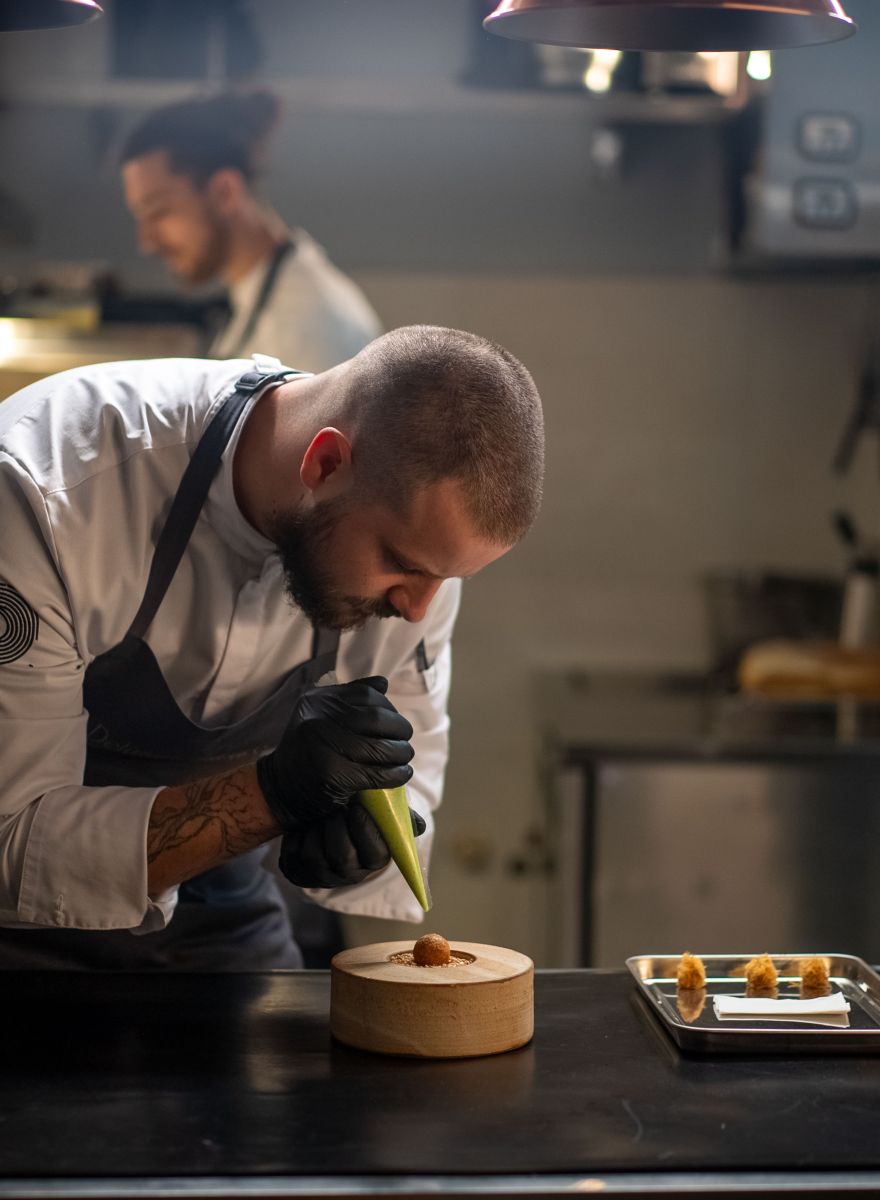
For me, cooking is first and foremost play and exploration. I don’t have a secret ingredient or a hidden formula. Often, mistakes become something that later turns into my signature. If something doesn’t go as planned, instead of discarding it, I ask myself: “Maybe this could actually be something special.”
When designing menus, dishes that initially feel like missteps sometimes grow on me and earn their place. That’s how I constantly learn – through errors and new attempts. I see beauty and potential in details others might overlook. Rules? To me they’re just guidelines – ones I like to bend, break, and rewrite.
When I started, I had boundless imagination and desire, but little knowledge. Today, with experience behind me, I still walk the path of experimentation with joy. Presentation matters, but what truly lingers is what a dish carries within itself – its soul, the element of surprise, the stretching of sensory boundaries. That’s what people feel and remember long after the last bite.
Defining Moments
Was there a turning point in your career that shaped you as a professional?
My first big turning point was definitely my time in France. I’d also highlight becoming the youngest head chef at Lafayette at just 25 – it was a great honour, but also a huge responsibility.
Perhaps even more important was when, at 22, I moved to Rijeka and took over a small restaurant, Volta. I worked with my friend Đorđe, who had just opened the place but didn’t have a head chef. He asked me what I wanted to do, and I instantly replied: “Molecular cuisine.”
He immediately ordered everything I needed from Amazon, closed the restaurant for a month and told me: “Go ahead – play.” It was just the two of us in a tiny kitchen, but that experience completely transformed the way I looked at both my work and my life. It gave me confidence and faith that you can achieve anything if you are truly committed and willing to take risks. Of course, it could have gone wrong – but luckily, it didn’t. That’s why I consider that moment one of the most defining and dearest in my career.
Beyond the Kitchen
Outside of the kitchen, where do you find inspiration for new dishes?
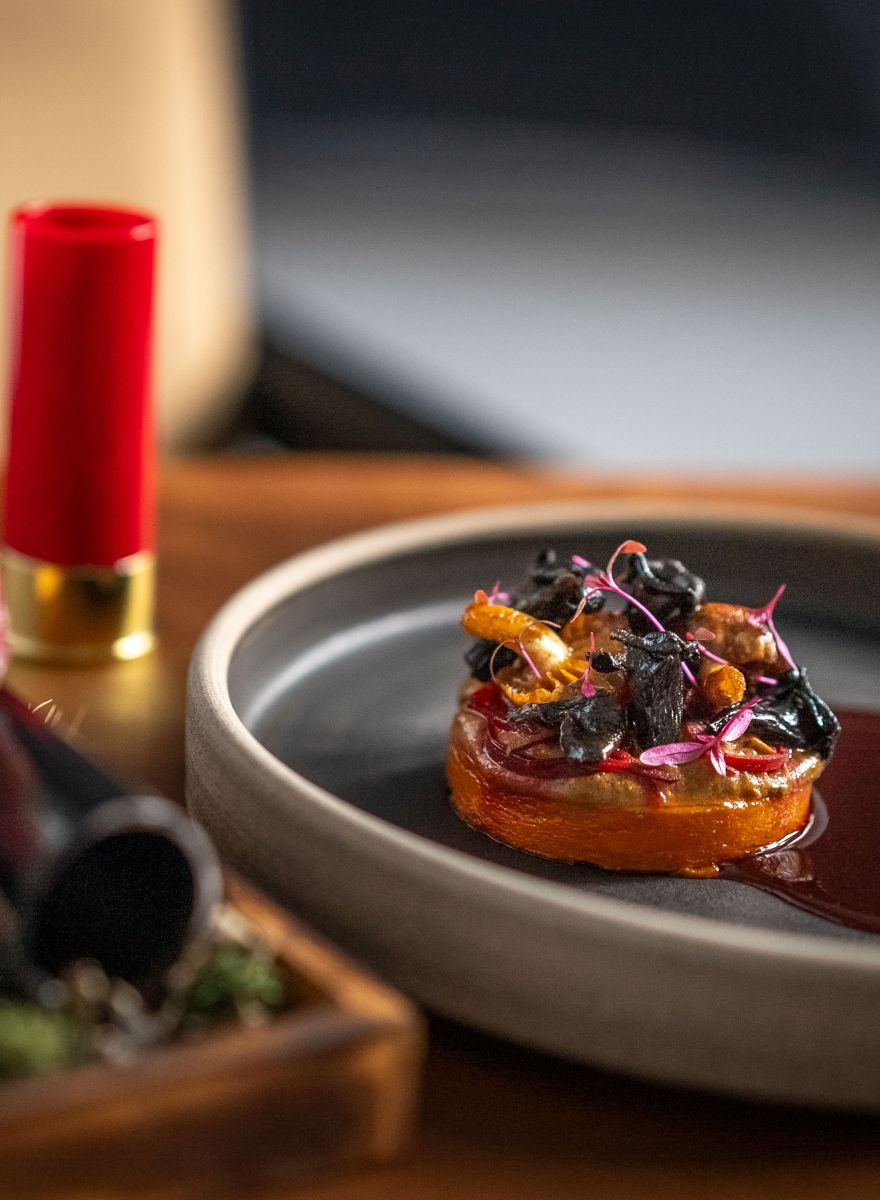
I rarely go looking for inspiration – it usually finds me, often in everyday moments. Nature is a frequent source. For instance, my previous menu was inspired by the forest. Game and the traditions of hunting often give me ideas. On that “Forest” menu, I served wild duck on a shotgun barrel with a sauce made inside an empty cartridge – details that added depth and authenticity.
My current menu, which I call 3.0, is more of a playground – less rigid, more experimental, with dishes branching off in different directions. But the foundation is always local and seasonal ingredients – that is the essence of every menu at Delirium Silence.
Culture Through Cuisine
If you had to tell the story of a culture through your dishes to a foreign guest, which culture would it be and what would that menu look like?
It would be a fusion of traditions and techniques I value most. My menus strongly reflect three cultures – Serbian, French, and Asian. From Serbia, I draw authentic ingredients and flavours like prebranac, pinđur, and čvarci – dishes that speak of home cooking and tradition. French techniques bring precision and elegance. Japanese influences bring the umami of fermentation – we can’t import all of it, so we create our own kombuchas, lacto-ferments, and homemade vinegars.
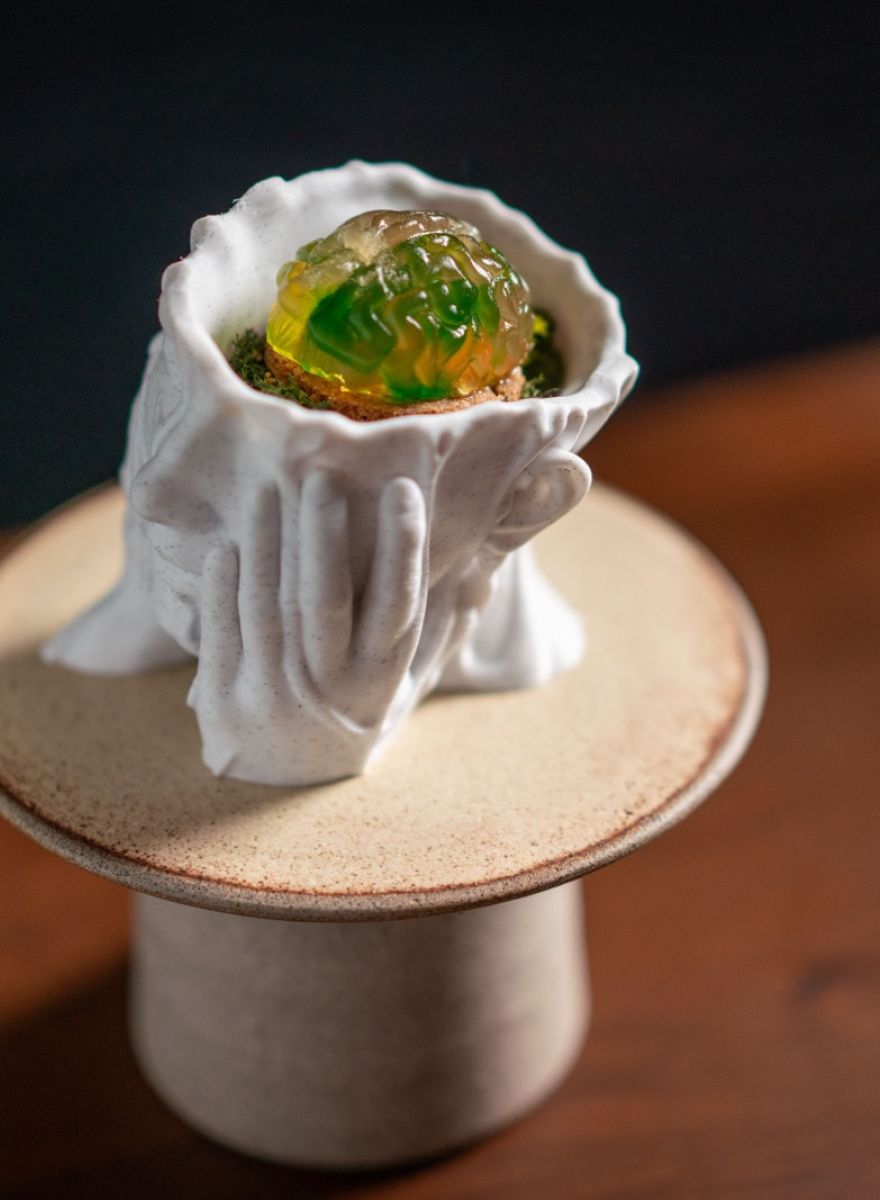
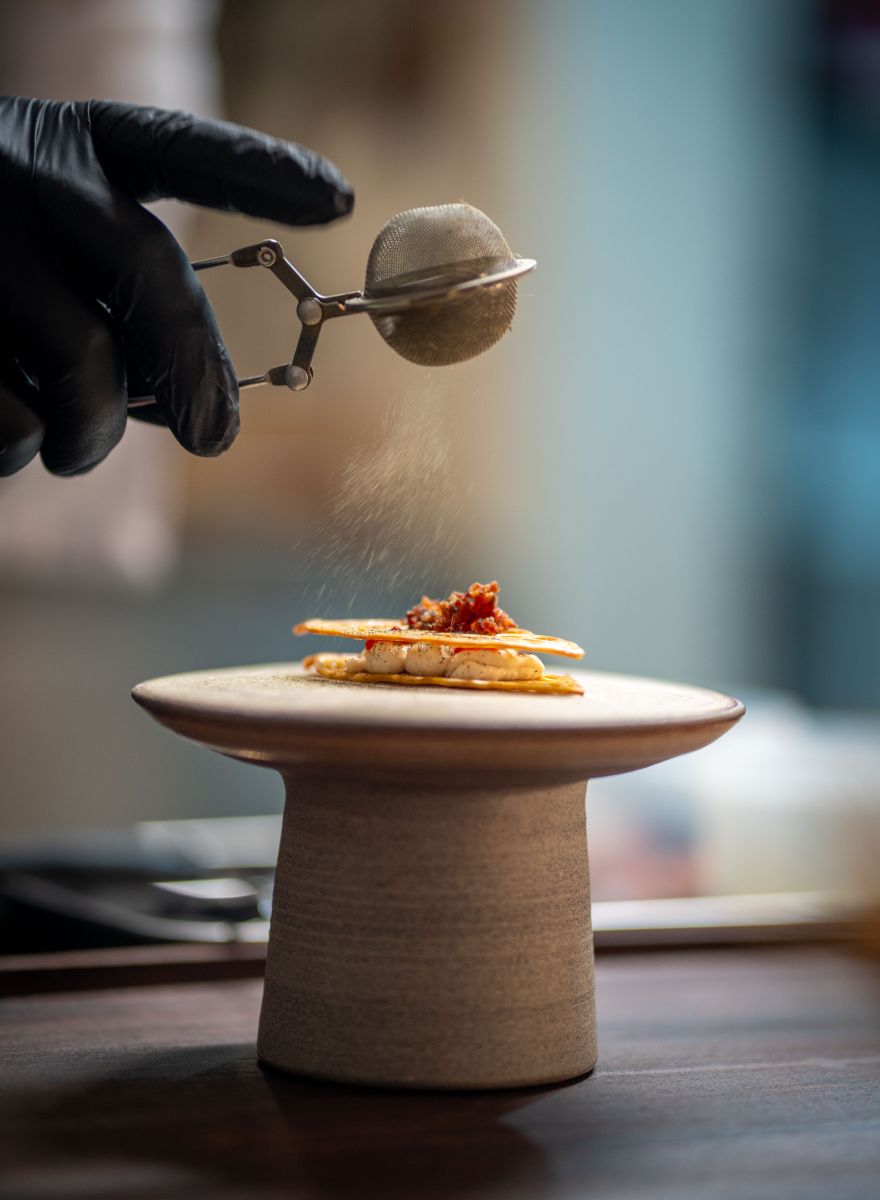
One of my signature dishes here is paprika in sour cream – but not as you know it. We ferment the peppers for 14 days, blend them into a jelly, then infuse the sour cream into it. It’s a play of textures and flavours – it looks like a dessert, but it’s actually a savoury dish with its own unique story. This is why I chose molecular cuisine – because it gives me complete freedom to reshape flavours, play, and surprise guests. To me, that is true cooking – an art form that surprises, challenges, and delights.
Memory on a Plate
If you could taste one dish again that evokes a truly priceless memory, what would it be and where would it take you?
The first that comes to mind is popara, because it takes me back to family breakfasts from childhood, when we all gathered at the table. Sharing food is what makes even the simplest meal unforgettable.

A First Taste of Priceless at Delirium Silence
What can guests expect from the Mastercard Priceless experience at Delirium Silence?
Guests who select the Mastercard Priceless experience at Delirium Silence will embark on a true gastronomic adventure in an intimate setting designed just for them. I’ll guide them through an interactive molecular gastronomy workshop, demonstrating how liquid nitrogen, unusual textures, and precise techniques can completely transform a dish. There will even be tips and tricks they can take home – perhaps surprising themselves along the way.
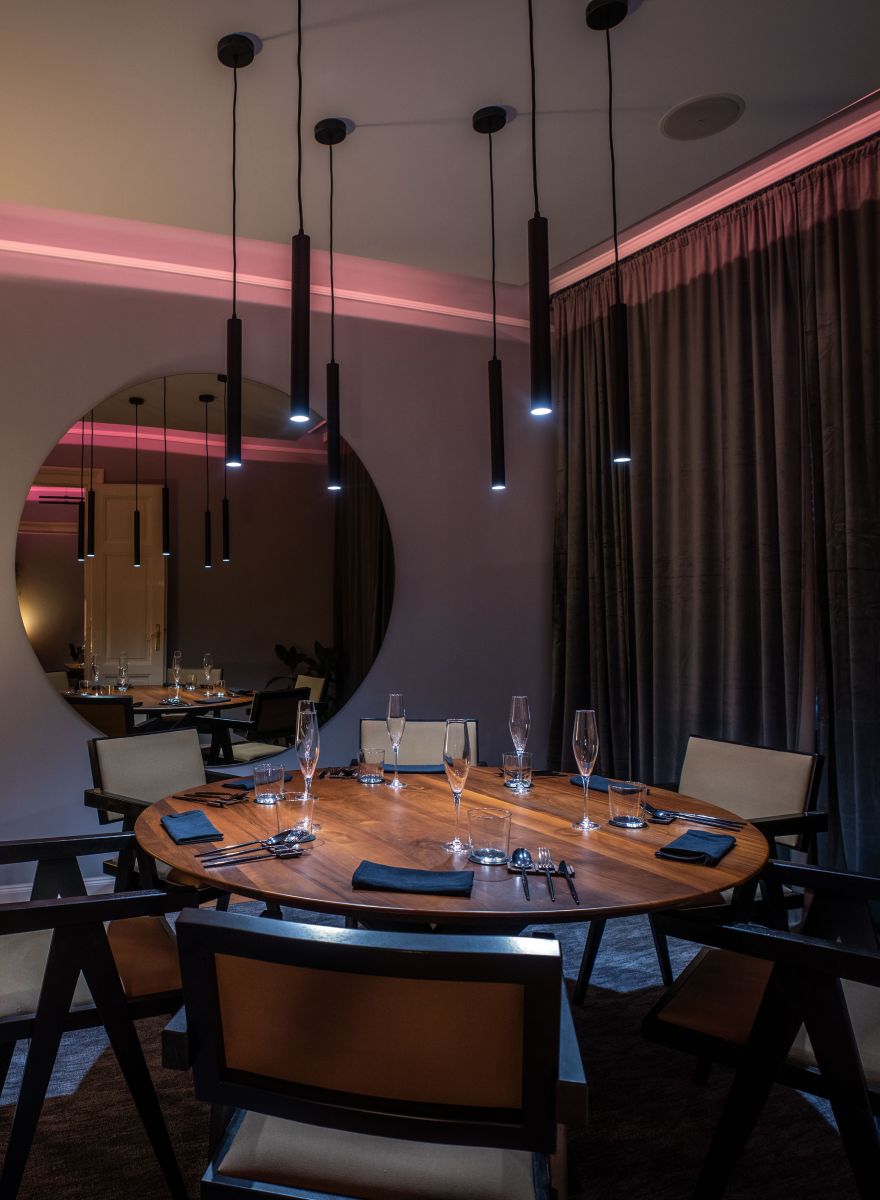
Once the creative rush settles, guests will enjoy a seven-course tasting menu, paired with local wines and signature cocktails. In our elegant, vintage setting – housed in a historic salon – I am confident that the blend of play, surprise, and flavour will create a truly Priceless memory.
The article was created in collaboration with: