Become a JRE-Inside+ member and enjoy exclusive benefits, inspiring interviews, recipes & articles, event infos and more.
- Always up to date with our world of fine dining
- Receive invites to exclusive events
- Get to know our Chefs through interviews and recipes
This article is for JRE-Inside+ members only
Go JRE-Inside+Interview with JRE-member Ksenija Mahorčič
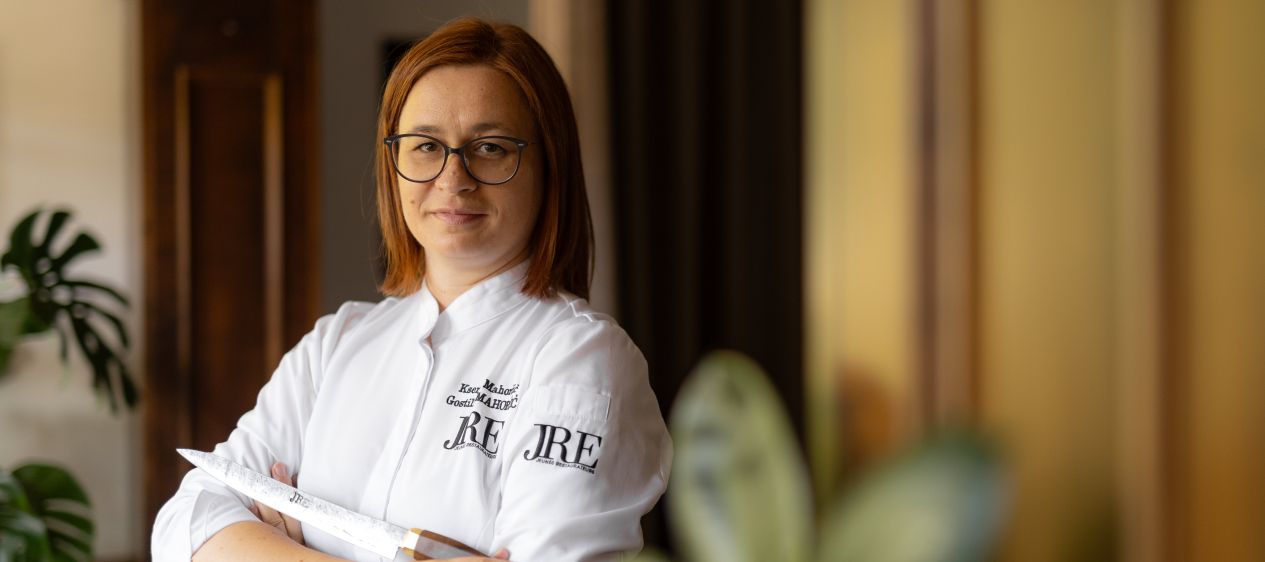
Normally, top chefs let their culinary creations speak for themselves — every ingredient, technique, and presentation reflects their passion and philosophy. In this JRE member interview, we go beyond the plate to explore the journey and inspirations of Ksenija Mahorčič from Gostilna Mahorčič.
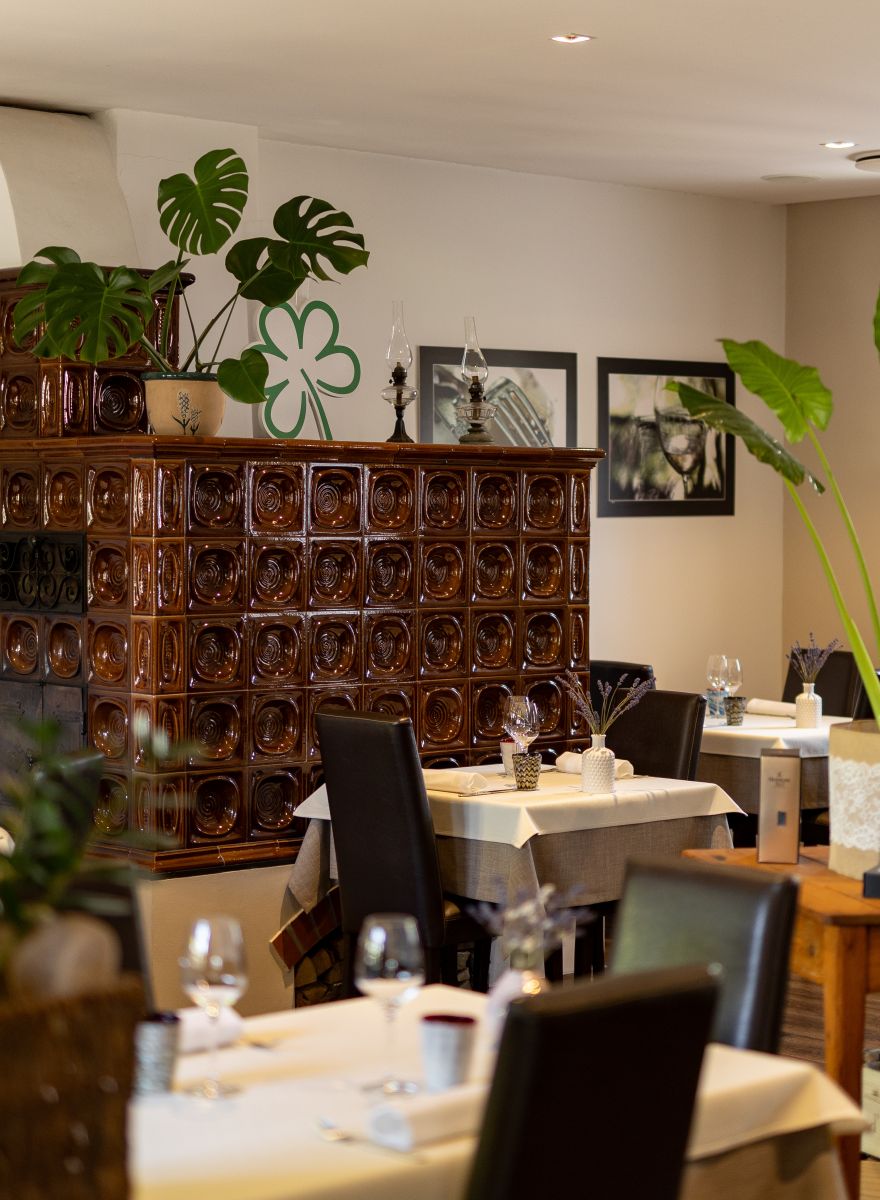
One of the few women at the very top of Slovenian fine dining, Ksenija Mahorčič is the proud holder of a Michelin Green Star. She creates in the village of Rodik, nestled between the Brkini hills and the Karst at Gostilna Mahorčič. Each of her dishes is the result of imagination and a distinct way of thinking. Direct, sincere, and brimming with creative energy, she is unafraid to break the rules—because when you step outside the frame, the world instantly becomes more interesting, she tells us with a sparkle in her eye.
Early Inspiration
Your journey among Slovenia’s most renowned chefs sounds almost cinematic – love led you into the kitchen!
That’s true, I ended up in the kitchen because of my love for Martin! (laughs) We’ve known each other since childhood—we grew up in Divača almost as neighbors, went to the same primary school, both played the clarinet. Much later, one summer, our friendship turned into love. He later confessed that he’d spent an entire year gathering the courage to ask me out. We went to a traditional concert of the orchestra we both once played in. Because he was overwhelmed with work at the inn, Martin promised his mother he’d return quickly—but when he was late, I walked him back. Thanks to my presence, his mother didn’t scold him; instead, she put a cloth in my hands and placed me behind the bar. I must have done well, because they asked me to come help again the next day. And I did. That was the beginning of my hospitality journey—at 21 years old.
From the bar to haute cuisine is quite a journey! Where did you acquire all the necessary culinary skills?
Today, that journey spans 27 years. I certainly inherited strong foundations from home. Cooking was always central to our family, and all important celebrations took place around our table. My grandmother Marija learned to cook from nuns, as was customary in wealthier families, and I still keep her handwritten recipes. My mother is also an excellent cook. I learned traditional dishes from both of them.
When Martin, as the fourth generation, took over the family inn and wanted to modernize the kitchen, we began buying cookbooks and attending courses. At the time, Slovenia offered few opportunities for contemporary culinary education, especially innovative approaches. So I looked abroad, followed renowned international chefs, and attended their trainings. I studied pastry-making in the UK, while in Italy I spent years deepening my knowledge through intensive, ingredient-focused courses. Understanding how ingredients behave is essential when creating signature dishes.
We traveled extensively, visited top restaurants, collaborated at dinners and festivals, and exchanged experiences with leading chefs. You must listen, understand their philosophy, their way of thinking. There lies an invaluable source of inspiration—in techniques, flavors, and stories told through food. All of this opened new horizons that I wove into my own work.
Do you remember your very first dish?
I brought my first dish from home— I baked a cake for the staff. Looking back, it was probably terrible; I wouldn’t make it today. But my mother-in-law Jožica proudly served it to guests, who praised it. That likely gave me the courage to trust my intuition and fully embrace my passion for cooking.
Defining Moments
Introducing fresh ideas into a 120-year-old traditional inn couldn’t have been easy…
Martin was born into hospitality. He grew up among guests and trained as a chef. Surrounded by strong female energy in both kitchen and service, it may have been harder for him alone to push new ideas. I came from outside and have always thought beyond established frameworks, so introducing change felt natural.
The turning point was the 2008 crisis. Sundays that once saw 80 guests suddenly had none. That gave us time to rethink everything. I started making ravioli, pasta, baking bread. Gradually, new dishes appeared alongside the classics. Over time, the old dishes faded, and my authorial cuisine was born.
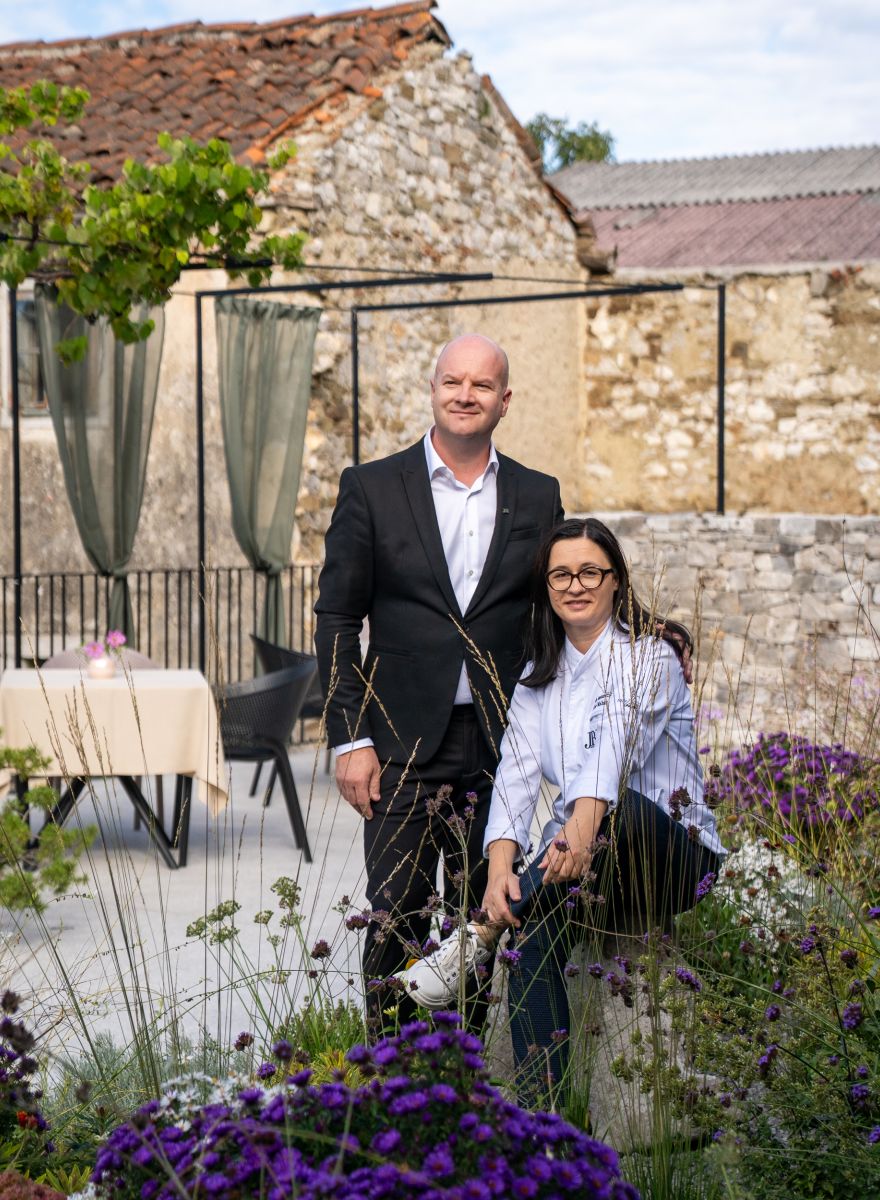
After 15 years of working together in the kitchen, Martin moved to the dining room. He’s a natural host, a Level III sommelier with immense wine knowledge. I, on the other hand, am more introverted and happiest creating in the kitchen.
Philosophy in the Kitchen
Today you’re one of Slovenia’s best-known chefs and a Michelin Green Star recipient. Was this creative fire always within you?
My parents exposed me early to craftsmanship, art, and music. I’ve always created—constantly, in every possible way. On weekends, my mother and I would travel by train to visit my grandmother in Istria, crocheting and knitting along the way. My other grandmother made tapestries; I made two myself as a young girl. I learned sewing from my mother and could make my own suit after primary school—of course choosing the most difficult pattern! (smiles)
Later, when both grandparents fell ill, my mother cared for them while working, so someone had to cook. My grandfather Marjan became my first true culinary critic.
What qualities define a great female chef, and why are there so few women in haute cuisine?
Perseverance, discipline, and courage are essential. Empathy is crucial—you cook not for your ego but for people. Creativity, openness, and the ability to grow from mistakes are equally important.
Why so few women? Because it’s extremely demanding work. Hospitality is relentless. I manage because I have strong support—from my husband and parents—and because I now shape my schedule according to my values. We’re closed three days a week for family. Balance is key; without it, you lose yourself—and your connection to the guest.
How important is the environment you create in, and how much does the Karst define your cuisine?
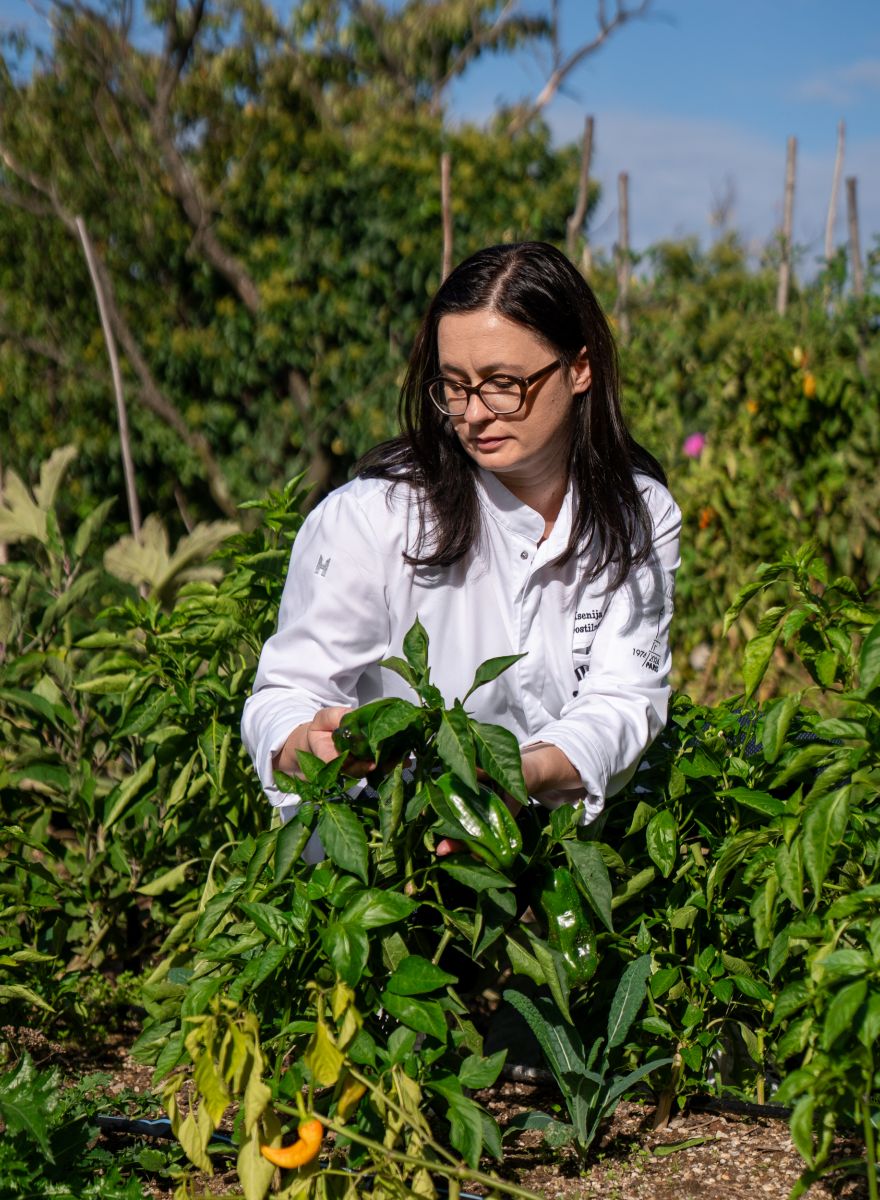
My cooking reflects territory and seasonality. What we eat and how we prepare it reflects our worldview. Karst, Brkini, and Istrian ingredients symbolize responsibility, respect for producers, and investment in the future. Heritage must be the foundation of modern life and creativity.
What does the Michelin Green Star represent?
It’s recognition for sustainability—care for the environment, people, and future. It’s a holistic view of hospitality, beyond the plate, focused on the entire story.
She proudly describes a network of local producers—from potatoes and honey to prosciutto, spirits, forest ingredients, and her own garden.
“For me, this star confirms that it’s possible to create excellence responsibly, deeply connected to nature and people.”
Signature Dishes and crafts
Which dish best represents you?
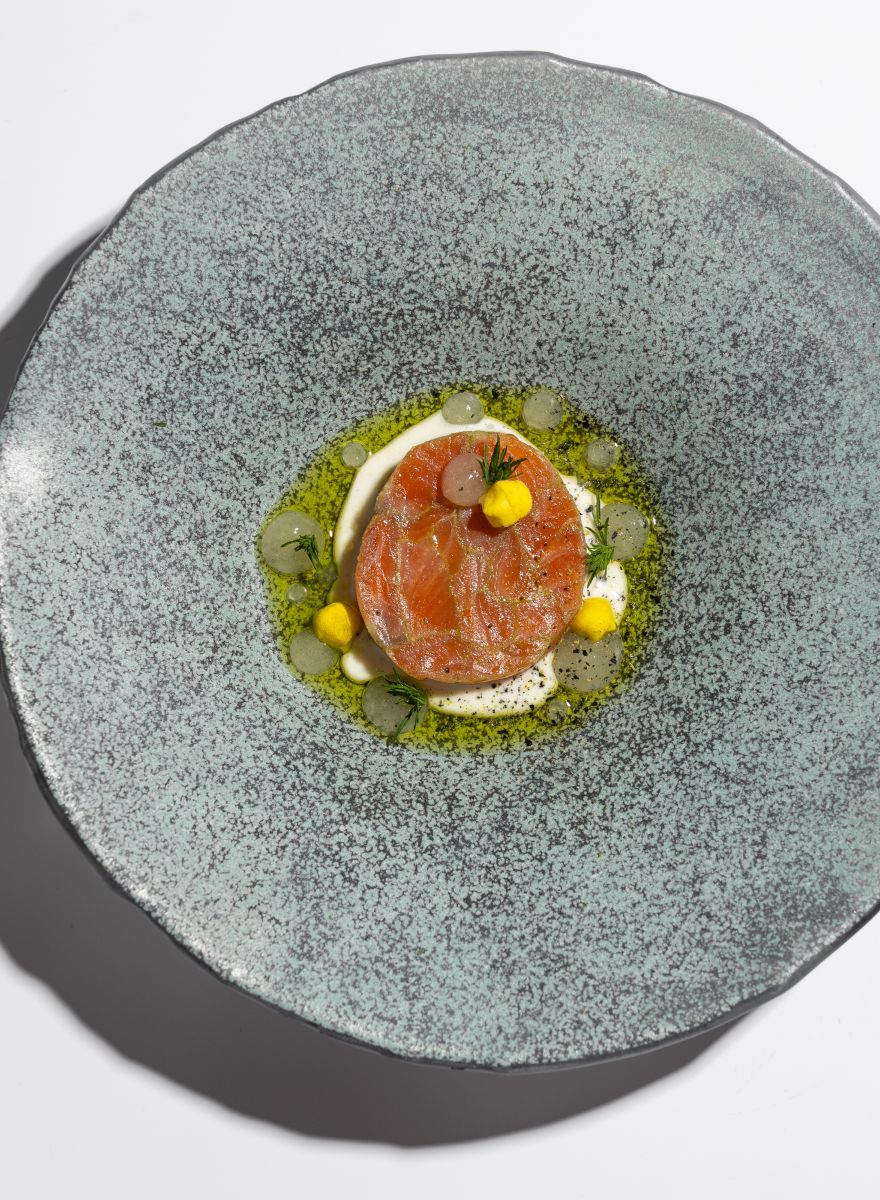
Probably my pâté—on the menu for ten years. Chicken liver pâté with cherries marinated in spruce tip syrup, chocolate, and deconstructed ‘supa,’ a traditional Karst dish.
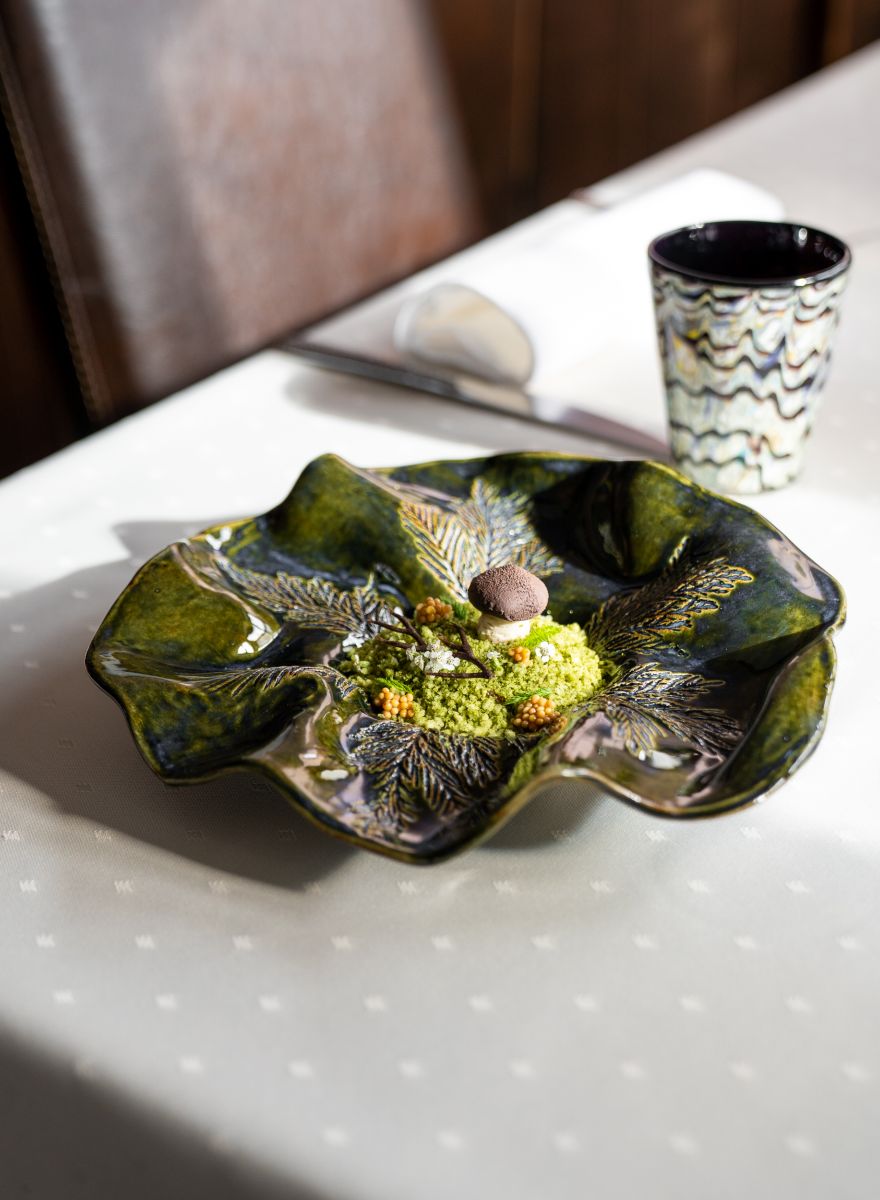
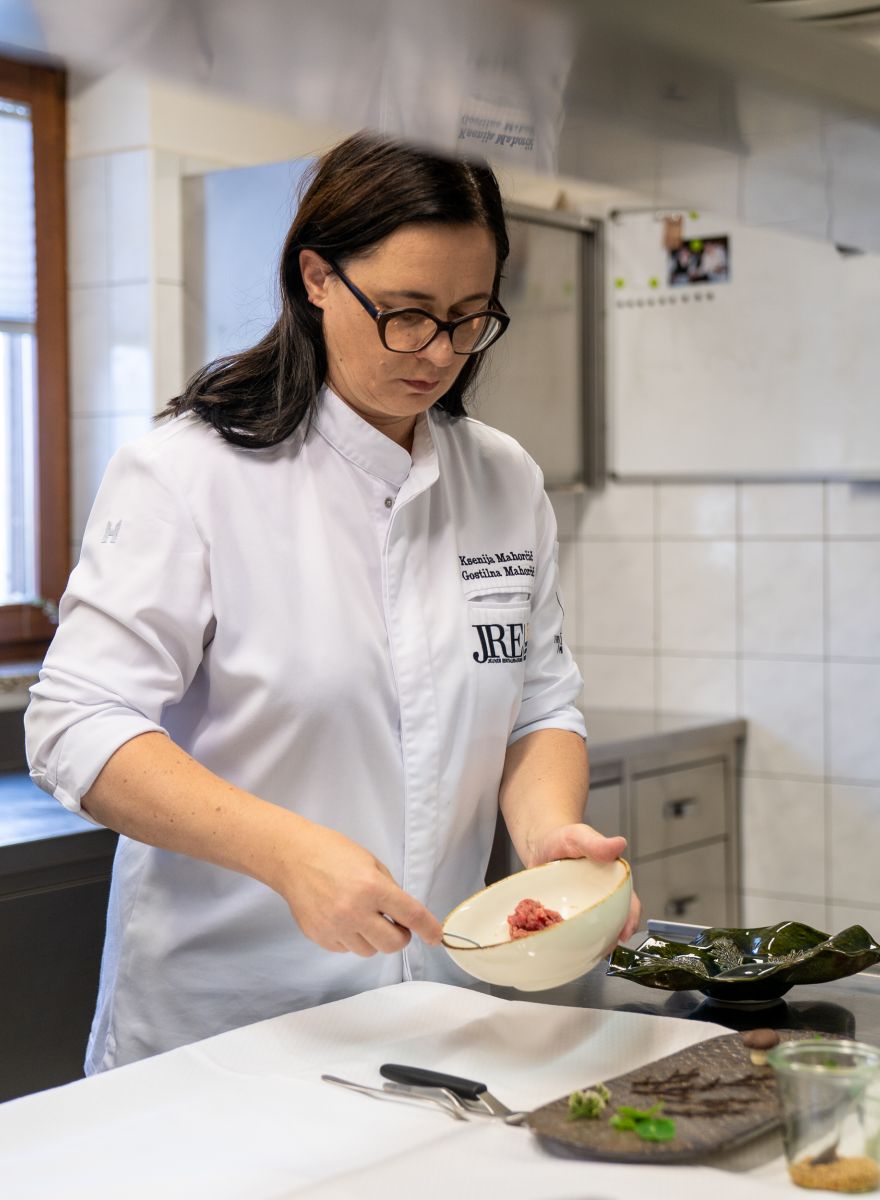
Another is our forest-inspired beef tartare, served with edible ‘moss’ and custom-designed ceramic plates that I make myself.
Probably my pâté—on the menu for ten years. Chicken liver pâté with cherries marinated in spruce tip syrup, chocolate, and deconstructed ‘supa,’ a traditional Karst dish.
Another is our forest-inspired beef tartare, served with edible ‘moss’ and custom-designed ceramic plates that I make myself.
You’re also known as a master pastry chef…
Pastry requires precision and knowledge. I learned from the best, especially in Italy. Recognition brings responsibility—expectations grow.
Which dessert are you most proud of?
A deliberately unattractive one—almost off-putting. But once you dig in, it reveals a light yogurt foam, tarragon ice cream, passion fruit ganache, hazelnuts, and elderflower pollen gathered by my father.
And your famous “potica in a jar”?
A perfect example of rule-breaking. Baked and pasteurized in glass jars, first presented in 2014 at the Ljubljana Design Month, it won two awards and became a signature Slovenian gift.
You even create your own plates…
What began as a hobby became an extension of my cuisine. Today, the dish comes first, and the plate continues its story through form, color, and texture.
Life in Hospitality
The chef’s profession looks glamorous, but it’s demanding…
Hospitality consumes you. We adjusted our rhythm—our weekend starts on Monday. What matters is quality time. We created a world that works for our family.
Is there rivalry among top chefs?
On the contrary—we share, help, and support each other, especially within JRE. It’s invaluable to know you have friends among colleagues.
Finally—can one get rich in hospitality?
I consider myself very rich—through experiences and fulfillment. True wealth lies in touching people, evoking emotions, and practicing genuine hospitality. That’s when you understand what it truly means to be rich.
The article was published in Revija Obrazi